
Consider the archetypal figure of the Christian Mary, a staple of early literature and art. She is the suffering mother, watching her son embark on a destiny she cannot save him from. This trope bled into modern storytelling. In J.D. Salinger’s The Catcher in the Rye , Holden Caulfield’s fragmented psyche is anchored by his younger sister, but his tragedy is rooted in the loss of his brother, leaving his mother in a state of nervous fragility that Holden tries desperately not to disturb. Here, the mother is a figure of fragile purity the son must protect, a dynamic that defined the "good son" for centuries.
As cinema and literature continued to evolve, the mother-son relationship became increasingly portrayed as a source of conflict and tension. Works like Tennessee Williams' A Streetcar Named Desire (1947) and Eugene O'Neill's Long Day's Journey into Night (1956) depicted the complex, often fraught relationships between mothers and sons, marked by resentment, anger, and a deep-seated sense of inadequacy. www incest mom son com
Why does the mother-son relationship fascinate us so relentlessly? Because it is the first relationship, and the last. It teaches a boy how to love, and later, how to leave. It teaches a mother how to hold on, and then, how to let go. Cinema and literature have shown us the full spectrum: from Norman Bates’s psychotic attachment to Stephen Dedalus’s sorrowful flight, from Sophie Portnoy’s liver-and-onions guilt to the quiet companionship of Kore-eda’s thieves. Consider the archetypal figure of the Christian Mary,
The bond between a mother and her son is one of the most complex, emotionally charged dynamics in human experience. It encompasses unconditional love, fierce protection, psychological separation, and sometimes, destructive codependency. Because this relationship serves as a foundation for a man's identity, artists have mined it for centuries to explore the depths of human nature. In cinema and literature, the portrayal of the mother-son dynamic has evolved from idealized archetypes to raw, psychoanalytic examinations of love, grief, and control. The Mythological and Psychoanalytic Foundations As cinema and literature continued to evolve, the
A figure who consumes her child's individuality, using guilt, emotional manipulation, or codependency to prevent the son from achieving autonomy.
The 20th century brought psychological realism to the forefront, allowing authors to explore the unspoken tensions of the household.
Many works highlight the "primal bond" of maternal love as a source of survival against extraordinary odds.
After eight years of service, the XCOM Barracks is shutting down.
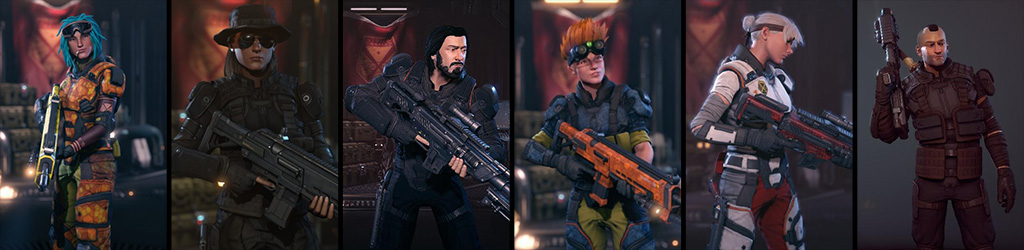
The XCOM Barracks was a place for XCOM 2 fans to upload, share, download, and rate their favorite custom characters for the game. Using the game's Character Pool, players could create, export, and import characters to be featured as the game's heroes and villains.
The XCOM Barracks was created by two college students and fans of the XCOM series when the game released in 2016. Since then, over one thousand characters were uploaded to the XCOM Barracks by the end of its lifespan.
After eight years of hosting and several major life and job changes, the site no longer functions quite as well as it used to, and we no longer have the bandwidth nor commitment to continue its upkeep. We believe, like all good things, the time has come for this site to end.
Nevertheless, we're tremendously proud of what we created, and we're incredibly honored to be a part of XCOM history. As a parting gift, the entire XCOM Barracks character archive is available (see links above) for download. The archive is sorted by user rating, starting with the highest rated characters in XCOM Barracks history. Each character .bin file contains an adjacent .json file which contains details for each character, including author and description.
An enormous THANK YOU to the hundreds of authors who shared their creations on the XCOM Barracks and users like you who have come to witness the best of what the community has to offer.
And of course, THANK YOU to Firaxis Games, 2K, and all the developers of the XCOM series, for the countless the memories of joy and grief brought by the game.
As always: Good luck, Commander. We will be watching.